
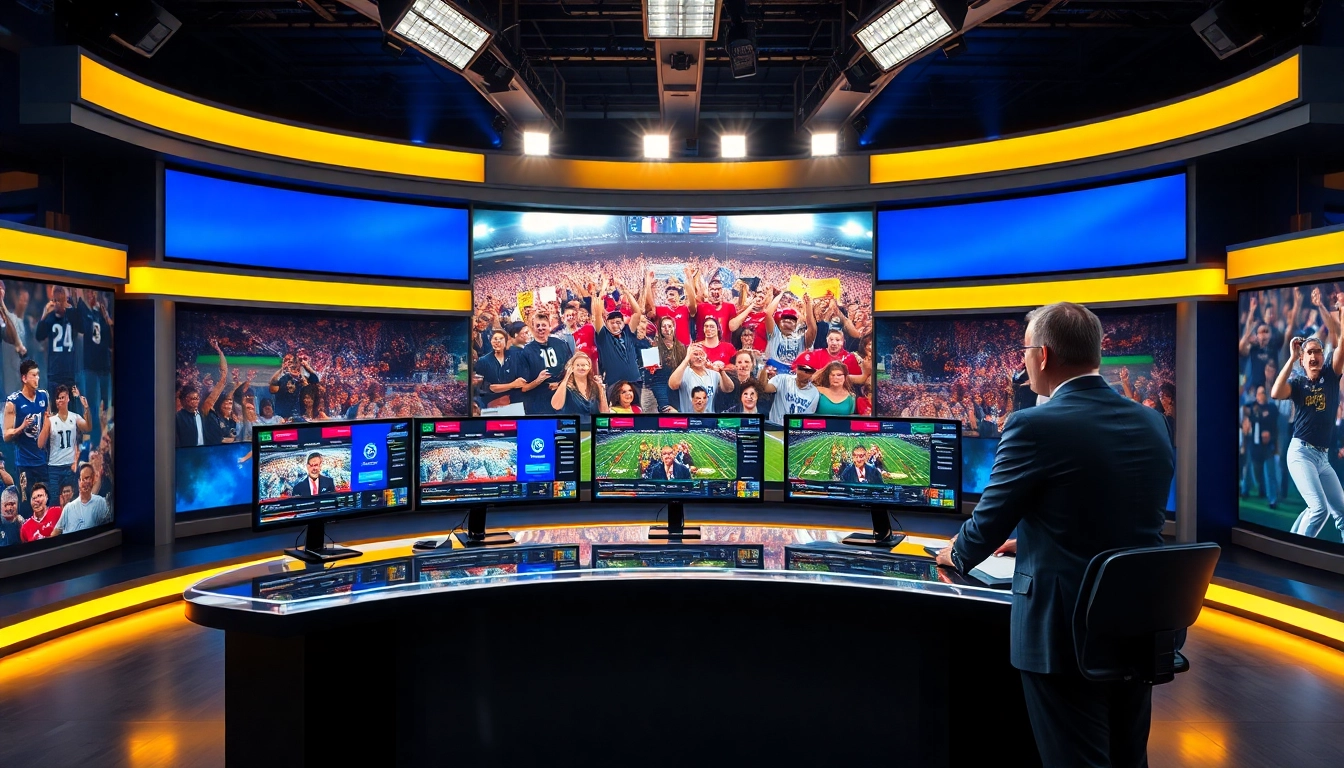
Introduction to Sports Broadcasting
Definition of Sports Broadcasting
Sports Broadcasting encompasses the transmission of live or recorded sports events on various platforms such as television, radio, and online streaming services. This form of media not only delivers play-by-play coverage of games but also includes highlights, analyses, and engaging commentary aimed at enhancing the viewer’s experience. The integration of storytelling with live sports creates an atmosphere that captivates fans worldwide, establishing an emotional connection with the events and teams they support. As the landscape of Sports Broadcasting evolves, it employs innovative technologies and techniques to serve audiences more effectively.
History and Evolution
The origins of sports broadcasting trace back to the early 20th century with radio broadcasts. The first live sports event broadcast occurred in 1921 when radio stations began airing boxing matches, quickly followed by baseball games. By the 1950s, television became popular, leading to a significant shift in how audiences consumed sports content. Major sports events became staples on television schedules, and iconic moments, such as Super Bowl broadcasts, showcased the potential of sports to draw massive audiences.
Over the decades, technological advancements transformed sports broadcasting. The introduction of color TV, cable networks, and satellite broadcasting enhanced viewers’ experiences. Online streaming emerged in the late 1990s and exploded in the 2010s, providing sports fans with the flexibility to watch games on various devices anywhere, anytime.
Importance in Modern Media
In today’s digital age, sports broadcasting plays a crucial role in the broader media landscape. It not only generates significant revenue through advertising and sponsorships but also drives cultural conversations and community engagement. Major sporting events, such as the Olympics and the FIFA World Cup, garner billions of viewers, showcasing sport’s capability to unite people across the globe. Furthermore, these events often serve as platforms for social change and discussions on pertinent issues, providing a rich context for the importance of sports in society.
Core Components of Sports Broadcasting
Live Coverage Techniques
Effective sports broadcasting relies heavily on dynamic live coverage techniques to capture the intensity and drama of events. Techniques such as multiple camera angles, instant replays, and the use of drones help bring the action right into the viewer’s living room. Coverage often involves a well-coordinated crew, including camera operators, technical staff, and production teams, all working together to ensure a seamless viewing experience.
Innovations like virtual graphics and augmented reality overlays enhance the storytelling aspect of sports broadcasting by providing vital statistics, player profiles, and tactical analysis in real-time. This level of engagement not only informs but also entertains viewers, enabling them to appreciate the intricacies of the sport more deeply.
Role of Commentators
Commentators are the voice of sports broadcasting, tasked with bringing the game to life through their insights and analysis. They provide context and color, guiding viewers through the action with expert commentary that includes strategy breakdowns and historical references. Commentators often possess backgrounds as athletes or coaches, giving them unique perspectives that enhance viewer understanding.
In addition to traditional play-by-play and color commentary, new roles have emerged, such as analysts and sideline reporters, who provide additional layers of information and storytelling. Their contributions not only deepen viewer engagement but also shape how fans perceive the game’s narrative in real-time.
Use of Technology in Broadcasting
The intersection of technology and sports broadcasting has led to revolutionary changes in how content is produced and consumed. High-definition video, interactive graphics, and advanced sound systems create immersive viewing experiences. Additionally, cloud computing and artificial intelligence are being leveraged for data processing, enabling broadcasters to provide insightful analytics and audience predictions.
Wearable technology is another exciting development; athletes now wear devices that monitor performance data during games, giving broadcasters access to real-time stats that enhance discussions around player effectiveness and strategy. As technology continues to evolve, the scope of sports broadcasting is set to broaden even further, yielding richer and more engaging content for fans.
Audience Engagement Strategies
Interactive Content Creation
To foster a deeper connection with audiences, broadcasters are increasingly turning to interactive content creation. This includes polls, quizzes, fantasy leagues, and live chats that allow fans to engage actively with the event as it unfolds. Interactive content not only boosts viewer participation but also increases loyalty and engagement levels, making fans feel integral to the sports broadcasting experience.
For example, broadcasters might create segments where viewers can vote on the “play of the day,” with results shared in real-time. These engaging experiences are designed to enhance the community atmosphere and are particularly effective among younger demographics.
Social Media Integration
Social media platforms have revolutionized how sports broadcasting connects with audiences. Broadcasters now use platforms like Twitter, Instagram, and Facebook to interact with fans, disseminate content, and build a community around their programming. Live-tweeting games, offering behind-the-scenes content, and encouraging fan discussions around key moments enrich the viewing experience and extend the conversation beyond the broadcast.
Furthermore, user-generated content often complements live broadcasts, where fans share their experiences and reactions. This not only drives engagement but also offers broadcasters valuable insights into audience preferences and sentiments during live events. By incorporating social media presence into their strategies, sports broadcasters can amplify their reach and engagement exponentially.
Understanding Audience Preferences
In an era characterized by vast content options, understanding audience preferences is crucial for sports broadcasters seeking to thrive. Conducting regular surveys, gathering demographic data, and analyzing viewer metrics help broadcasters tailor their content to audience desires. This might include the strategic selection of featured sports or the focus on popular personalities and themes.
Moreover, the rise of personalized viewing experiences means that audiences prefer tailored content that aligns with their interests. Broadcasters can offer a variety of viewing options, including enhanced commentary tracks or alternate camera angles, allowing fans to engage in the manner that suits them best.
Challenges in Sports Broadcasting
Dealing with Broadcasting Rights
One of the prominent challenges in sports broadcasting is navigating complex broadcasting rights agreements. As leagues become more profitable, rights fees for exclusive broadcasting agreements have skyrocketed, leading to fierce competition among networks. Broadcasters must balance the need for extensive coverage with the financial implications of exclusive deals, often resulting in limited viewing options for fans.
Furthermore, as more leagues explore direct streaming options, traditional broadcasters may face declining audience numbers, necessitating reevaluations of strategies and partnerships to maintain relevance.
Maintaining Quality in Live Events
Delivering high-quality broadcasts during live events is another ongoing challenge. Factors such as weather conditions, venue accessibility, and technical malfunctions can impact the viewing experience negatively. Broadcasters must invest in advanced technology and backup systems while training staff to adapt to unforeseen situations swiftly.
Rehearsing live broadcasts and troubleshooting potential pitfalls before game day are crucial steps in maintaining quality. Broadcasters who can execute flawless live coverage are more likely to retain viewer trust and loyalty during challenging circumstances.
Adapting to Changes in Technology
As technology continually evolves, sports broadcasters must remain agile and adaptive. Transformations in consumer behavior, such as the shift to mobile viewing and streaming services, necessitate continuous upgrades in both equipment and content strategy. Staying ahead of trends requires investment in talent, resources, and training to ensure successful implementation.
Broadcasters should regularly assess and integrate new technologies, such as 5G capabilities, to enhance viewer experience and remain competitive in the rapidly changing landscape. Keeping abreast of emerging trends allows broadcasters to innovate their offerings and provide fans with fresh and compelling content.
Future Trends in Sports Broadcasting
Impact of Streaming Services
Streaming services have drastically altered how sports content is consumed and distributed. As more viewers opt for streaming over traditional cable packages, broadcasters must adapt to this shift. Integrating subscription models, offering exclusive content, and harnessing the flexibility of on-demand viewing have become essential strategies for reaching audiences effectively.
Streaming platforms also provide opportunities for niche sports to gain visibility, promoting diversity in sports broadcasting and drawing in previously untapped audiences. The future suggests increased collaboration between traditional broadcasters and streaming services to leverage strengths and offer comprehensive viewing experiences.
Virtual and Augmented Reality
The incorporation of virtual and augmented reality technologies holds tremendous potential for enriching sports broadcasting. These immersive technologies could transform how fans engage with sports, offering them unprecedented views and experiences. For instance, virtual reality can allow viewers to experience games as if they were sitting in the middle of the action, while augmented reality can enhance broadcasts with interactive overlays, providing instant statistics and insights.
As the technology becomes more accessible, the use of VR and AR in sports broadcasts may revolutionize fan experiences, creating a more profound connection between viewers and the events.
Data Analytics for Enhancing Experience
Data analytics is becoming a cornerstone in sports broadcasting, allowing networks to tailor content to viewer preferences and improve overall quality. By leveraging data on viewer behavior, networks can make informed decisions about broadcast strategies, including the timing of ads, the focus of replays, and engagement techniques.
In addition, teams and broadcasters can harness performance analytics, providing a deeper understanding of player and team dynamics. This information not only adds depth to commentary but also enhances viewer engagement, as fans appreciate a more analytical approach to sports coverage.
Frequently Asked Questions
What is Sports Broadcasting?
Sports Broadcasting refers to the transmission of live or recorded sports events on television, radio, or online platforms, enhancing viewer engagement.
How has Sports Broadcasting evolved?
Sports Broadcasting has grown from early radio coverage to high-definition television and online streaming, integrating advanced technologies for viewer engagement.
What role do commentators play?
Commentators provide live analysis and updates, enriching the viewer experience through expert insights and engaging narratives about the game.
Why is audience engagement important?
Engaging the audience boosts viewership and loyalty, allowing fans to feel connected to the events and fostering ongoing interest in the content.
What are the future trends in Sports Broadcasting?
Future trends include increased use of streaming services, the integration of augmented reality, and advanced data analytics to refine the viewer experience.